Classic 1980s Arcade Shooters Return with a Roguelite Twist
Huntdown: Overtime Preview – A Retro Arcade Shooter Rebuilt With Roguelite Action
Meta Description: Huntdown: Overtime brings retro arcade run-and-gun action back with roguelite progression, cyberpunk visuals, tactical shooting, randomized weapons, and a gritty dystopian 1980s style.
Huntdown: Overtime is shaping up to be one of the most stylish retro-inspired action games for players who miss the golden age of arcade shooters. Built as a follow-up to the 2020 cult hit Huntdown, this new entry takes the original game’s dystopian run-and-gun formula and adds a roguelite structure that changes how each run feels.
Instead of simply moving from one handcrafted stage to the next, players are now thrown into repeated runs filled with randomized weapons, upgrade choices, bounty targets, branching rewards, and escalating danger. The result is a game that still feels like a love letter to old-school arcade shooters, but with enough modern progression to keep players coming back.
For fans of Contra, Metal Slug, RoboCop, ESWAT, and gritty pixel-art action games, Huntdown: Overtime looks like a promising blend of nostalgia and modern indie design. It may not completely escape the familiar repetition of the roguelite genre, but its combat, presentation, and world design give it a strong identity.
What Is Huntdown: Overtime?
Huntdown: Overtime is a roguelite run-and-gun shooter set in a violent, neon-soaked cyberpunk future. The game builds on the foundation of the original Huntdown, which was known for its sharp pixel art, heavy arcade influence, and over-the-top dystopian style.
The first Huntdown followed a more traditional level-based structure. Players advanced through stages, fought gangs, defeated bosses, and moved forward in a direct campaign format. Overtime changes that formula by using roguelite progression. This means players begin runs with changing loadouts, fight through repeated areas, collect rewards, upgrade their character, and gradually become stronger over time.
That design shift makes Huntdown: Overtime feel more replayable. Each attempt gives players another chance to improve, unlock better weapons, choose different paths, and push deeper into the game. It also fits surprisingly well with the arcade roots of the series. Classic arcade shooters were already built around replaying stages, mastering patterns, and surviving a little longer each time. Overtime simply turns that old structure into a modern progression loop.
A Sequel With a Different Structure
One of the most important things to understand about Huntdown: Overtime is that it is not just a copy of the first game. It keeps the same attitude, world, and visual style, but the structure is different. The original game was closer to a classic campaign-based arcade shooter. Overtime is more focused on repeated runs and gradual improvement.
This change may divide some fans. Players who loved the original Huntdown for its handcrafted campaign may prefer the older approach. A traditional level structure gives each stage a stronger sense of place and progression. However, the roguelite format gives Overtime more long-term replay value.
Because each run can involve different weapons, upgrades, enemy encounters, and reward paths, the game encourages experimentation. You might begin one run with a reliable firearm and a heavy melee weapon, then start another with a different combination that forces you to change your rhythm.
This is the kind of system that can work especially well for short play sessions. Players can jump in, attempt a run, earn upgrades, and return later without needing to commit to a long campaign chapter. For a modern indie action game, that structure makes sense.
Retro Arcade Style Meets Cyberpunk Violence
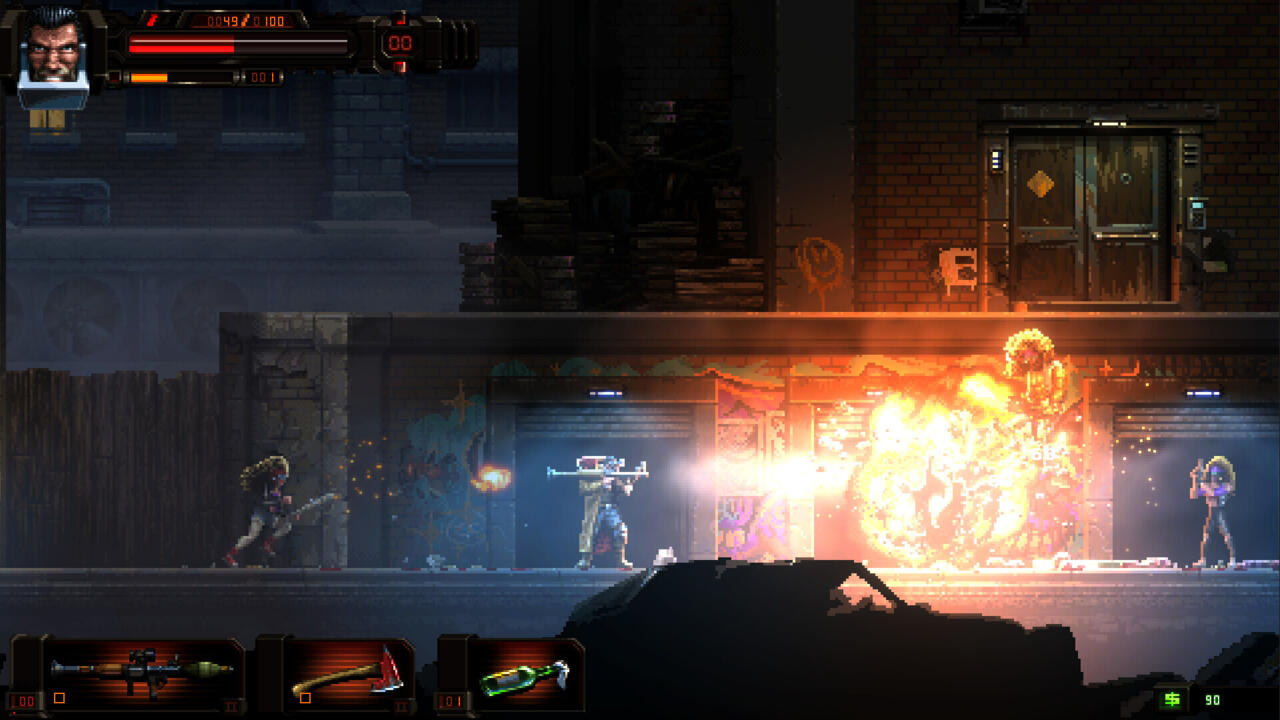
The strongest part of Huntdown: Overtime is its visual identity. The game takes place in a gang-controlled future that feels like the 1980s never ended. Everything is exaggerated: the fashion, the weapons, the streets, the criminals, the neon lights, and the violent urban atmosphere.
This is not a clean science-fiction future. It is a dirty, chaotic, arcade-style nightmare filled with street gangs, dangerous alleys, industrial details, and explosive action. The world feels heavily inspired by the way older movies and arcade games imagined the future. It has the spirit of RoboCop, classic side-scrolling shooters, and dystopian action films where every criminal gang has its own loud personality.
The pixel art is detailed and expressive. Enemies are not just simple targets that walk into bullets. They react to hits, move around the environment, use cover, and fall in ways that make the action feel more physical. Small animation details help the game feel more modern than many retro-inspired shooters.
That attention to detail matters. Huntdown: Overtime does not rely only on nostalgia. It uses retro style as a foundation, then adds modern animation, environmental interaction, and stronger combat feedback.
A Dark Cyberpunk Hero
Huntdown: Overtime also leans into its cyberpunk tone through its main character. Players take control of a trenchcoat-wearing law enforcer who feels like a familiar action-movie archetype at first. But the game quickly pushes that idea into darker territory.
After suffering a brutal injury, the protagonist is repaired with cybernetic enhancements, including a mechanical jaw that gives him a more monstrous appearance. The doctor responsible for bringing him back does not treat him like a normal person. Instead, he is treated more like a weapon, a test subject, or a tool designed to be sent back into the streets again and again.
This setup fits the roguelite structure well. Every death is not just a reset. It feels connected to the world and the character’s condition. The player returns to the fight, stronger but also more dependent on the upgrades and augmentations that keep him alive.
That small story layer gives Huntdown: Overtime more personality than a simple arcade shooter. It does not need long cutscenes or heavy dialogue to make its world interesting. A few sharp details are enough to create a grim, stylish tone.
Combat Is Tactical, Not Mindless
At first glance, Huntdown: Overtime may look like a simple run-and-gun shooter. But the combat is more deliberate than just holding the fire button and running forward. Movement and shooting are intentionally weighty, which makes positioning and timing important.
Enemies often appear in small groups rather than overwhelming waves. That does not make them easy. They use cover, close in when they see an opening, and punish careless movement. If you waste ammunition, you can quickly find yourself in trouble. This forces players to aim carefully, choose shots wisely, and mix ranged combat with melee attacks.
The game also gives players ways to use the environment. You can create cover, knock objects into enemies, or turn parts of the stage into hazards. For example, throwing an object at an enemy or using a piece of the environment creatively can change the outcome of a fight.
This makes combat more interesting than a basic shooter where every encounter is solved the same way. Huntdown: Overtime rewards players who pay attention to the space around them.
The Bounty System Adds Risk and Reward
One of the smartest gameplay ideas in Huntdown: Overtime is the bounty system. Some enemies are marked as higher-value targets, and players can earn more by capturing them alive instead of killing them.
This creates a strong risk-reward decision. After weakening a bounty target, you can try to detain them. But arresting them is not instant. It takes time and leaves you vulnerable. If other enemies are still nearby, they can interrupt you or punish the attempt.
That means players have to make quick tactical choices. Should you clear the area first and risk the bounty escaping or causing more damage? Should you rush the arrest for a better reward? Or should you simply kill the target and accept a smaller payout?
This system fits perfectly with the game’s gritty cop-versus-criminal theme. It also adds tension to fights that might otherwise be straightforward. Every bounty encounter becomes a small decision point, not just another enemy to shoot.
Randomized Weapons and Roguelite Progression
Because Huntdown: Overtime uses roguelite mechanics, each run begins with a randomized loadout. Players may start with different firearms, such as pistols or rifles, along with different melee weapons like bats or hammers.
As players progress, they unlock more weapons and upgrades that can appear in future runs. This gives the game a steady sense of improvement. Even when a run ends, it can still contribute to long-term progress.
The upgrade system is important because it helps reduce frustration. Roguelite games can feel repetitive when players are forced to replay early areas too often. But if each run makes the character stronger or unlocks new options, the repetition becomes more rewarding.
Huntdown: Overtime already appears to understand that balance. The early areas may feel familiar after repeated attempts, but the promise of new weapons, better upgrades, and tougher bosses gives players a reason to continue.
Branching Paths and Boss Choices
Another roguelite element in Huntdown: Overtime is the ability to choose paths based on rewards. These choices can affect what kind of upgrades you pursue and which bosses you eventually face.
This gives players more control over each run. Instead of moving through the exact same sequence every time, you can make decisions based on your current build. If your weapon setup is strong but your survivability is weak, you may choose a path that offers defensive upgrades. If you feel confident, you may chase bigger rewards and harder encounters.
Branching paths are especially useful in a game built around repetition. They help each run feel less predictable and allow players to develop different strategies. Over time, this can turn Huntdown: Overtime into a game about learning not only enemy patterns, but also how to plan a successful route.
Does Huntdown: Overtime Feel Repetitive?
Like many roguelite games, Huntdown: Overtime may face one major challenge: repetition. The genre is built around replaying areas, and not every player enjoys that structure. If the early stages do not change enough, some players may feel like they are seeing the same content too often before reaching the more exciting parts.
This is where early access could help the game. Since Huntdown: Overtime is launching in early access, the developers have room to adjust pacing, progression speed, upgrade balance, enemy variety, and stage variation based on player feedback.
A faster early upgrade curve could make the game more immediately satisfying. More stage variety could also help the roguelite format feel stronger. The foundation is already promising, but balancing repetition and progression will be key to the game’s long-term success.
Why Huntdown: Overtime Is Worth Watching
Huntdown: Overtime stands out because it understands what made retro arcade shooters exciting. It has stylish pixel art, heavy weapons, dangerous streets, memorable enemies, and fast bursts of action. But it also brings modern systems that help the game feel more replayable in 2026.
The mix of tactical shooting, melee attacks, environmental hazards, randomized loadouts, bounty captures, and long-term upgrades gives the game a strong foundation. It does not feel like a shallow nostalgia project. It feels like a modern action game wearing the armor of an old arcade classic.
For fans of indie shooters, roguelite action games, and cyberpunk arcade style, this is one to keep on the radar.
Final Thoughts
Huntdown: Overtime takes the stylish world of the original Huntdown and reshapes it into a roguelite arcade shooter with more replay value, more strategic combat, and a strong cyberpunk identity.
The game’s best ideas are already clear: detailed pixel art, satisfying gunplay, risky bounty captures, randomized weapons, and a dystopian 1980s-inspired future packed with violent personality. While some players may still prefer the original game’s traditional level-based design, Overtime’s roguelite structure gives the sequel a clear reason to exist.
If the early access period improves progression speed and adds more variety to repeated runs, Huntdown: Overtime could become one of the most entertaining retro action games for PC players who love old-school shooters with modern roguelite depth.
For now, it looks like a promising side-sequel that knows exactly what kind of player it wants to reach: someone who loves arcade action, cyberpunk chaos, tactical shooting, and the feeling of getting just a little stronger every time they return to the fight.