Rebellion CEO Explains Why Sniper Elite Studio Won’t Use Generative AI for Final Game Art
Meta Description: Rebellion CEO Jason Kingsley says the Sniper Elite and Atomfall studio does not expect to use generative AI for final on-screen game art, but believes AI tools may help with iteration, testing, QA, and development workflows when used ethically.
Rebellion, the independent studio behind Sniper Elite, Zombie Army, and Atomfall, is taking a careful approach to generative AI in game development. According to CEO Jason Kingsley, the studio has no expectation “to ever use gen AI on the screen,” meaning players should not expect final in-game artwork, characters, or visible creative assets in Rebellion titles to be generated by AI.
That position matters because the use of generative AI in video games has become one of the most heated topics in the industry. Some developers see AI tools as a way to speed up production, improve testing, and reduce repetitive work. Others worry that AI could replace artists, designers, writers, and QA teams, while also raising ethical questions around training data, authorship, and creative ownership.
For Rebellion, the answer appears to sit somewhere in the middle. Kingsley is not arguing that every use of AI is automatically wrong. Instead, he believes the conversation needs more nuance. The studio does not want AI replacing human creativity on screen, but it may consider AI as a development tool when it helps teams explore ideas faster or automate repetitive technical tasks.

Why Rebellion Does Not Want AI-Generated Final Game Art
Kingsley’s clearest point is that Rebellion does not believe generative AI should be used for the final creative visuals players see in its games. That means the studio is not currently planning to ship games where on-screen art, characters, environments, or major visible assets are generated by AI instead of human artists.
This is an important distinction. Many players are not only concerned about AI existing in development tools; they are especially concerned about AI-generated artwork replacing artists in the final product. Rebellion’s stance suggests that human-made visual identity remains important to the studio.
For a company with franchises like Sniper Elite and Atomfall, art direction, atmosphere, level design, and historical detail are central to the player experience. A game world needs intention. Human artists and designers make choices based on tone, theme, readability, gameplay needs, and emotional impact. Rebellion appears unwilling to give that final creative responsibility to AI.
AI as a Tool, Not a Replacement
Kingsley’s broader argument is that AI may have practical uses when it acts as a tool inside the development process. He described generative AI as something that could help developers explore ideas quickly before committing human time and budget to them.
For example, a level designer might take an existing environment and ask what it would look like in snow, at night, or in a different historical setting. AI could generate a rough concept quickly, helping the team decide whether that direction is worth exploring. This would not replace the final work of artists and designers. Instead, it could work like a fast sketch or visual brainstorming tool.
That kind of use is different from shipping AI-created assets directly in the game. It is closer to using AI for early experimentation, mood exploration, or internal planning.
How AI Could Help Level Design
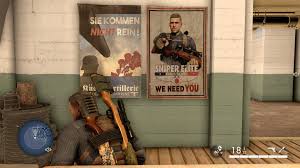
Rebellion is known for large, readable combat spaces, especially in the Sniper Elite series. Level design in these games is extremely important because players need vantage points, patrol routes, hiding spots, objective paths, traps, and long-range shooting opportunities.
AI tools could theoretically help designers test variations faster. A classic Sniper Elite level could be visualized in different weather conditions, different times of day, or different environmental themes. Would a snowy version change visibility? Would a night version create better stealth? Would a different terrain layout improve enemy movement?
These are the kinds of questions designers already ask. AI may simply make the early “what if?” phase faster. The key is that human developers would still decide what works, what feels right, and what should actually be built.
AI and Repetitive Technical Tasks
Kingsley also mentioned a more technical example: collision boxes. In game development, collision defines where players, objects, bullets, and enemies can physically interact with the world. On a large map like those found in Atomfall or Sniper Elite, setting up collision across thousands of objects can take a lot of time.
A person can do that work manually, and historically that is exactly how it was done. But if machine learning tools can handle repetitive collision setup, developers may be freed to focus on more creative or higher-value tasks. Instead of spending weeks placing collision boxes, a designer or technical artist could build more objects, improve encounters, or refine gameplay systems.
This is one of the more practical arguments for AI in game production. Used carefully, it can remove tedious work without removing the need for human judgment.
Could AI Help With QA Testing?
Quality assurance is another area where AI may have useful applications. Games are complex, and players often do unpredictable things. QA testers are responsible for finding bugs, breaking systems, testing edge cases, and making sure a game is stable before launch.
Kingsley suggested that AI agents could potentially help by playing through games at scale. Instead of only relying on dozens of human testers, a studio might run thousands of automated agents to search for bugs, unusual behavior, or rare edge cases.
However, he also emphasized that this should not eliminate human QA jobs. Human testers are still essential because people are uniquely good at doing strange, creative, unexpected things inside games. The best QA testers do not simply follow instructions. They experiment, exploit systems, push boundaries, and find issues that automated tools may miss.
In this model, AI supports QA rather than replacing it. It expands testing capacity while human testers remain responsible for deeper judgment, creativity, and analysis.
Why the AI Debate Is So Difficult
The debate around AI in game development is difficult because different people mean different things when they talk about “AI.” Some players object to AI-generated art because of ethical concerns around stolen training data and job replacement. Some developers talk about AI in terms of workflow automation, bug testing, or production tools. These are very different use cases.
Kingsley’s point is that the conversation should be more meaningful and less extreme. Some people reject every form of AI entirely. Others embrace every possible use without concern. Rebellion’s position suggests that the real answer may depend on context, ethics, transparency, and whether the tool supports or replaces human workers.
This middle-ground view may become more common as studios experiment with AI while facing pressure from players, employees, unions, and platform policies.
Independent Ownership Gives Rebellion More Freedom
One reason Rebellion can take this careful position is its ownership structure. The company is privately owned by Jason Kingsley and his brother. It does not answer to venture capital investors or public shareholders in the same way many larger companies do.
That independence matters. In publicly traded companies, AI can be framed as a way to cut costs, reduce headcount, and improve margins. When financial pressure becomes the main motivation, AI may threaten jobs more directly.
Rebellion’s self-funded model gives the studio more room to make decisions based on long-term creative values rather than short-term investor expectations. That does not mean every decision is easy, but it does give the company more control over how it uses new technology.
What This Means for Future Rebellion Games
Rebellion’s upcoming projects, including Alien Deathstorm, are expected to follow the studio’s current philosophy. The company may explore AI tools in the development pipeline, but it does not expect to rely on generative AI for final on-screen art.
For players concerned about AI-generated game content, that may be reassuring. Rebellion seems to be drawing a clear line between internal tools and final creative output. The studio is open to technology that improves workflow, but not at the cost of replacing the human-made identity of its games.
Why This Approach Could Become a Model
Rebellion’s stance may offer a practical model for other studios. Instead of treating AI as either a miracle solution or a forbidden technology, developers can ask specific questions. Does this tool help humans create better work? Does it replace creative labor? Is it ethical? Is it transparent? Does it improve the game for players?
Those questions are more useful than broad slogans. AI is not one thing. It can be used for concept exploration, code assistance, animation cleanup, localization drafts, QA bots, accessibility testing, production scheduling, or final art generation. Each use case deserves separate judgment.
For many players and developers, the most acceptable uses may be the ones that reduce repetitive work while preserving human authorship and creative control.
Final Thoughts
Rebellion’s position on generative AI in game development is careful, practical, and clearly shaped by the studio’s independent identity. The company does not expect to use AI-generated visuals as final on-screen game art, but it does see possible value in AI as a tool for iteration, testing, and repetitive technical tasks.
That distinction is important. Players are increasingly concerned about how games are made, not just how they play. Studios that communicate clearly about AI, credit human workers, and avoid replacing artists with machine-generated content may earn more trust as the industry changes.
For Rebellion, the goal appears to be simple: use technology only where it helps human creativity, not where it erases it. In a gaming industry still trying to understand the future of AI, that may be one of the most reasonable positions a studio can take.