GTA Online Revisited: An Open-World Masterclass
GTA Online’s Evolution: From Failed Launch to One of the Biggest Games in the World
Few games in modern history have undergone a transformation as dramatic as GTA Online.
What began as a broken multiplayer add-on in 2013 has grown into one of the most successful live-service games ever created. Today, it’s not just part of Grand Theft Auto V—it has become its own ecosystem.
This is the story of how GTA Online evolved, why it still works, and what keeps millions of players coming back in 2026.
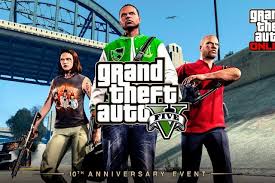
The Launch That Almost Killed It
When GTA Online first released, it was a disaster.
Players encountered:
- Unstable servers
- Frequent crashes
- Lost characters and progress
- A lack of meaningful content
Within weeks, frustration grew. Within months, many players left entirely.
Rockstar later admitted the launch failed—and acknowledged that some players would never return.
At the time, GTA Online looked like a failed experiment.
Rockstar’s Long-Term Strategy
Instead of abandoning the project, Rockstar did something rare: they committed to fixing it long-term.
Update after update slowly rebuilt the experience:
- Stability improvements
- New missions and activities
- Expanded progression systems
Over time, GTA Online stopped feeling like a broken mode—and started feeling like a platform.
A Game That Outgrew Its Origins
Originally, GTA Online was grounded in realism.
Early gameplay focused on:
- Street-level crime
- Small-scale missions
- Simple multiplayer activities
That version of the game no longer exists.
Modern GTA Online has shifted toward spectacle:
- Weaponized vehicles
- Futuristic technology
- Large-scale cinematic missions
This shift changed the tone entirely—from gritty crime simulator to chaotic sandbox.
The Problem With Its Beginning
Ironically, GTA Online’s introduction hasn’t kept up with its evolution.
New players still experience a tutorial designed for a much smaller game.
Within minutes, they are overwhelmed by:
- Multiple mission lines
- Business systems
- Constant notifications and calls
The result is confusion rather than clarity.
This outdated onboarding is one of the game’s biggest weaknesses today.
A World That Feels Alive—and Chaotic
Despite its flaws, GTA Online succeeds because of its world.
Los Santos is not just a map—it’s a shared space where players interact in unpredictable ways.
In a single session, you might:
- Help a player complete a mission
- Be attacked by another player
- Witness complete chaos unfold nearby
No two sessions are ever the same.
The “Content Buffet” Problem
Over the years, GTA Online has accumulated an enormous amount of content.
It now includes:
- Heists and missions
- Competitive modes
- Side activities
- Legacy systems
But not all of this content is relevant anymore.
Many older modes are rarely played—but remain in the game.
Why?
Because removing them would likely upset players, even those who no longer use them.
This creates a bloated experience that can feel overwhelming.
Why GTA Online Still Works
Despite everything, GTA Online continues to succeed.
Its core strengths remain powerful:
- Freedom: Players choose how to play
- Variety: Endless activities
- Player interaction: Unpredictable gameplay
- Longevity: Constant updates
These elements keep the experience fresh—even after years.
Final Verdict
GTA Online shouldn’t have survived—but it did.
And more than that, it evolved into something far greater than originally planned.
It’s messy. It’s inconsistent. It’s sometimes overwhelming.
But it’s also one of the most dynamic multiplayer worlds ever created.
That’s why it still matters in 2026.